How AI-Powered VDRs Accelerate Due Diligence to Meet SEBI’s T+66 IPO Listing Deadline
Ten-plus stakeholders, hundreds of documents in email threads, and version confusion at 11 PM the night before a filing. With SEBI’s compressed IPO timelines, there’s no longer a buffer to absorb these delays.
It’s clear that “more people and more emails” is no longer a viable due diligence strategy. The merchant bankers who consistently hit deadlines have replaced fragmented workflows with a structured, AI-assisted approach inside a single secure environment.
This article provides a practical framework for making that shift. We’ll cover a 6-point VDR evaluation checklist for IPOs, a breakdown of where AI actually saves time, and how to avoid common failure modes.
Why Do SEBI’s Compressed IPO Timelines Make Traditional Due Diligence Work?
The problem isn’t a lack of effort. It’s that fragmented workflows using email, shared drives, and spreadsheets can’t produce fast, consistent, and auditable outcomes when there’s no time to patch the gaps.
A tighter listing timeline removes the buffer that previously absorbed three specific failure points:
- Retrieval latency: Someone needs a specific financial document or a clause in an auditor’s report. Finding it in an unstructured shared drive takes hours you don’t have.
- Coordination overhead: Questions from counsel, auditors, and underwriters arrive in separate email threads. Answers get lost, duplicated, or never formally closed out.
- Audit gaps: When SEBI asks who saw what and when, email-based workflows produce incomplete and inconsistent answers.
These issues don’t just slow you down. They create real risk, including inconsistent disclosures, missed sub-deadlines, and (when access isn’t properly controlled) insider-trading exposure.
What Does an “AI-Powered VDR” Actually Change in IPO Due Diligence (and What Doesn’t It Change)?
Let’s be direct about what AI does and doesn’t do, because the hype around “AI in deals” often outruns the reality.
What AI genuinely helps with:
- Smart indexing and categorization across large, mixed-format document sets (PDFs, Word, Excel).
- Clause and keyword discovery that would take a junior team member hours to do manually.
- Drafting assistance for repetitive Q&A responses (think first-pass answers that a reviewer then confirms, not final answers that bypass review).
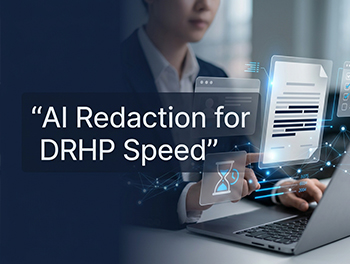
- Redaction at scale, applying consistent treatment across hundreds of documents rather than one-by-one.
What AI does not do: replace legal review, guarantee ICDR compliance, or produce regulator-ready outputs without human sign-off. Every redaction and key disclosure still needs qualified eyes on it.
The real unlock isn’t any single AI feature. It’s parallel work inside a standardized workflow. Multiple parties can review simultaneously within one controlled system, with every action logged.
What 6-Point Checklist Should You Use to Evaluate AI-Powered VDRs for SEBI-Facing IPO Due Diligence?
Evaluate VDRs on the workflow outcomes you actually need, like speed, traceability, and multi-party coordination, not just generic feature lists. Here’s the framework:
1. Audit-ready traceability by default
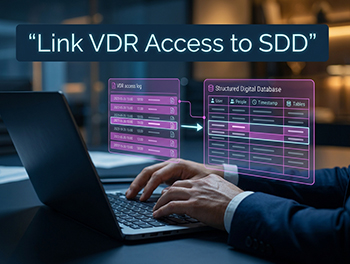
Every user action should be logged automatically with a timestamp and user identifier, including views, downloads, uploads, and permission changes.
- Look for one-click export of activity reports in a format your compliance team can use.
- Confirm the log is comprehensive enough to answer “who saw this document and when” in a SEBI inquiry.
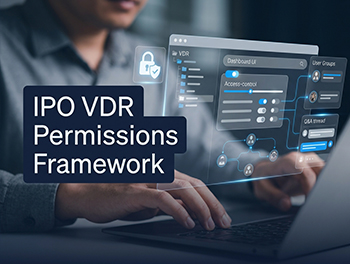
- Test the ability to isolate party-specific folders without creating parallel rooms.
- Confirm that removing access is immediate and irrevocable when a party’s role ends.
3. AI-powered retrieval that actually saves hours
Smart indexing and search should handle mixed document types without manual tagging. Clause recognition should surface relevant language without requiring exact search terms.
- Upload a realistic sample set and time how long it takes to find a specific clause.
- Confirm the system handles scanned PDFs, not just native digital files.
4. Scalable redaction workflows
Manual redaction is too slow for IPO volumes. You need batch-level capability with a human review layer.
- Confirm redactions are consistent and can be audited (not just visually obscured).
- Check that the workflow keeps a record of what was redacted and by whom.
5. Centralized Q&A with accountability
Every question from an external party should be logged in-platform: who asked, who was assigned, what the answer was, and which document it referenced.
- Confirm the Q&A history is exportable as part of a compliance pack.
- Look for notification routing so no question sits unassigned.
6. Leak deterrence and insider-trading risk controls
Watermarking, download restrictions, and access revocation are the baseline. Look for identity-level traceability on every document view.
- Confirm watermarks embed user identity, IP address, and timestamp.
- Verify that download controls can be set per file or per user group.
How Do You Pressure-Test a VDR in a 30-Minute Pilot?
Before committing, run a structured pilot with real document types:
- Upload 30 mixed documents (PDF, Word, Excel) and measure time-to-index and search accuracy.
- Run a mock Q&A: assign a question to a named owner, close it, and pull the history log.
- Generate an activity report and confirm it’s complete, readable, and exportable.
If a VDR can’t produce a clean audit log from a 30-minute test, it won’t hold up under a live deal.
How Do AI-Powered VDR Workflows Compress Time Across the IPO Due Diligence Lifecycle?
The largest time savings come from eliminating bottlenecks at every stage.
Intake: A pre-built folder structure and bulk upload reduces the “document housekeeping” phase from days to hours. Documents land in the right place from the start.
Review: Multiple parties (counsel, auditors, underwriters) can review simultaneously within their permissioned view. No more waiting for one group to finish before another can start.
Requests and Q&A: Instead of an email, a request for “the auditor’s letter” becomes a tracked, assigned item inside the platform. Nothing gets lost in an unmonitored inbox.
Redaction: DCirrus AI-assisted redaction applies consistent treatment across large document sets. The AI flags candidates for your team to confirm. The system accelerates work, but qualified reviewers retain accountability.
Outcome: You get fewer backtracks, fewer last-minute “missing document” escalations, and faster readiness for each regulatory checkpoint.
How Do You Keep Q&A, Versions, and Access Logs “SEBI-Audit-Ready” When 10+ Parties Are Involved?
Audit readiness is a workflow design problem, not a technology problem. The technology enables it, but only if your process enforces it.
In practice, “audit-ready” requires:
- Single source of truth: All document requests and responses live in-platform. If it happens in email, it doesn’t exist for audit purposes.
- Version discipline: One current version per document, a clear naming convention, and a change history showing what replaced what and when.
- Q&A traceability: Every question has an owner, a responder, a timestamp, a final answer, and a link to the document it references.
- Reporting cadence: Weekly or milestone-triggered exports of activity logs and Q&A summaries for internal review.
DCirrus supports this with integrated Q&A forums, secure messaging, version control, and comprehensive audit trails. But the workflow rules, like “no email answers” and mandatory ownership, must come from the deal team. The platform supports your compliance program; it doesn’t run it for you.
What Are the Most Common Failure Modes with AI-Powered VDR Adoption in IPO Teams (and How Do You Prevent Them)?
Most VDR failures in IPOs are operational, not technological. Here are the five patterns that cause problems and the fix for each.
Pitfall: Over-permissioning external parties → Fix: Use role templates with least-privilege defaults. External counsel gets access to legal folders; they don’t need financial models.
Pitfall: Q&A drifting back to email → Fix: Establish a “no email answers” rule on day one. Route all questions through the platform and set up notifications so nothing sits unanswered.
Pitfall: Poor document hygiene (duplicates, unclear naming) → Fix: Use an intake checklist and assign one person as taxonomy owner before the room opens.
Pitfall: AI distrust or overtrust → Fix: Build human review gates for redactions and key disclosures. AI is a drafting and flagging tool, not a final-authority tool.
Pitfall: Weak offboarding when a party’s role ends → Fix: Use access revocation and file expiry controls. DCirrus DRM controls (like print/copy restrictions, dynamic watermarking, and IP restrictions) reduce the risk of documents circulating after access should have ended.
Who Should Own What: What’s a Simple Responsibility Matrix for Running an IPO VDR?
Clear ownership prevents delays. Three roles cover the critical ground:
VDR Administrator (Deal Ops / PMO)
- Room setup, folder structure, permission templates
- User onboarding and offboarding
- Audit log exports and reporting
Functional Content Owners (Finance / Legal)
- Upload completeness and version control
- Q&A responses for questions in their area
- Flagging gaps before filing milestones
Compliance / Partner Reviewer
- Periodic review of access logs and Q&A quality
- Exception handling and escalation
A note on data governance: with international counsel, data location matters. DCirrus supports data localization by letting clients choose server locations. This supports your compliance program but doesn’t substitute for legal advice on jurisdiction-specific obligations.
Summary and Next Steps: What Should You Do This Week to Reduce IPO Due Diligence Cycle Time?
The 6-point checklist (traceability, granular permissions, AI retrieval, scalable redaction, centralized Q&A, and leak deterrence) gives you a clear framework for evaluating a VDR.
The one action to take this week: run a 30-minute pilot using real IPO document types, a mock Q&A cycle, and a log export. That single test will tell you more than any feature comparison.
After that, standardize your permission roles, lock in your folder structure, and enforce the “Q&A in-platform only” rule from day one.
FAQ
Does SEBI mandate using a VDR for IPO due diligence? No, but its audit trail expectations require a structured workflow that email and shared drives often fail to provide under scrutiny.
Can AI in a VDR replace legal counsel review or diligence checklists? No. AI accelerates mechanical work like indexing and search. Legal judgment and final disclosure sign-off remain with qualified professionals.
What’s the minimum security baseline a VDR should meet for IPO work? Role-based access, complete audit trails, dynamic watermarking, download controls, 2FA, and immediate access revocation.
How do you handle international counsel while maintaining India data residency? Choose a VDR that supports data localization, allowing you to designate server locations in India while providing access to international parties.
How quickly can an IPO VDR be set up without creating a messy folder structure? With a pre-built IPO folder template, a room can be configured in under an hour. The key is to establish the taxonomy before uploading documents.
How do you prevent sensitive documents from being forwarded or leaked? DRM controls (like print/copy restrictions and file expiry), dynamic watermarking with user identity, and immediate access revocation make unauthorized distribution significantly harder and more traceable.
What should we export and store post-IPO for audit readiness? Full activity logs, complete Q&A history, version histories, and permission change records. Store these as part of your deal file.
How do we estimate ROI on a per-deal basis? Track hours spent on document retrieval and Q&A management in your current process. Teams commonly find that these activities alone account for 30-plus hours of avoidable work per deal.
Want to Accelerate IPO Due Diligence Without Compromising Security or SEBI Audit Readiness?
DCirrus VDR combines AI-powered document retrieval, centralized Q&A with full traceability, granular permissions, and dynamic DRM controls in a single platform. It’s built for the complexity and compliance demands of SEBI-facing IPO workflows, helping you compress cycle time without trading away control.
Latest Posts