Defining ‘Audit Trail’: How to Meet SEBI’s Expectations for Transaction Traceability
Six weeks from your DRHP filing, SEBI sends an inspection notice. Your team scrambles. Approvals happened on WhatsApp, versions weren’t tracked, and auditor logs are siloed.
That isn’t an audit trail. It’s a liability.
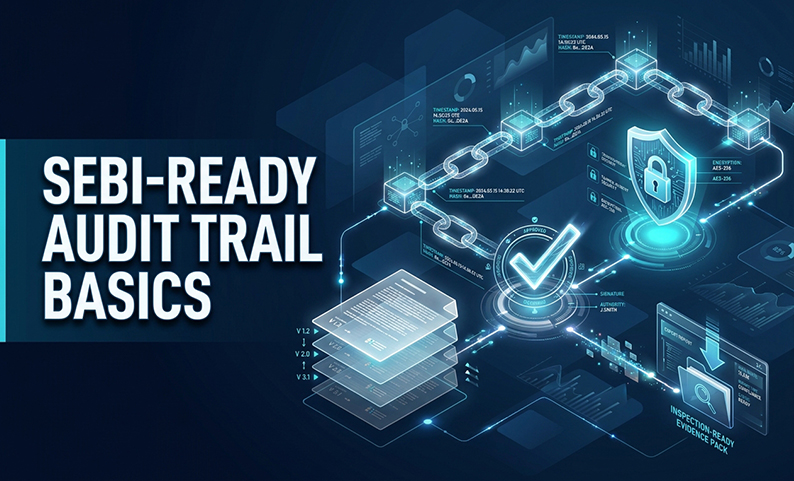
Let’s be clear: an audit trail in SEBI’s eyes isn’t just a checkbox or a log file. It is a defensible chain of evidence connecting every person, decision, document, and handoff from deal initiation to settlement. Firms that build this chain proactively shorten inspection cycles, protect themselves during exceptions, and close deals faster.
The Real Risk: “We Have Logs” Isn’t the Same as “We Can Prove Traceability”
Most deal teams have logs, like VDR downloads, email history, and system timestamps. But SEBI doesn’t ask if you have logs. They ask you to prove what happened, in sequence, with evidence.
What SEBI-Style Scrutiny Looks Like in Practice
During an inspection, regulators try to reconstruct a transaction. They want to know who made which decision, when, using what information, and if disclosures were made correctly. They focus on exceptions, like a late approval, a document change after a key date, or unauthorized access.
If you can’t answer those questions with a single, coherent evidence set, your scattered logs become a liability. Missing links between systems and undocumented off-platform activity invite more questions and slow down approvals.
Frame the Solution: A “SEBI-Ready Traceability Chain” (Not Just an Audit Log)
Think of an audit trail less as a record you generate and more as a traceability chain you build and maintain throughout a deal.
The 3 Layers You Must Be able to Show: Transaction Events, Document Evidence, and Access/Approval History
A complete traceability chain has three connected layers:
- Transaction events: This covers what happened, from initiation and mandate acceptance to regulatory filings and settlement. The sequence and timestamps are non-negotiable.
- Document evidence: This shows which versions existed, who reviewed them, when they were approved, and if disclosure documents changed after access was granted.
- Access and approval history: This details who was in the data room, what they did, and if approvals came from authorized people through the right channels.
All three layers must connect. An approval timestamp is hard to defend without a linked communication record.
SEBI-Ready Audit Trail Checklist (7 Points)
1) Define the Lifecycle: What “End-to-End” Covers from Initiation to Settlement
Map your transaction from origination to settlement. Identify every handoff between systems or parties, because this is where traceability usually breaks. Before the deal begins, designate a single, authoritative system for each phase.
2) Standardize the Minimum Audit Record Fields (The Non-Negotiables)
Every log entry, no matter the system, should capture these fields:
- Who: User ID, role, party (internal/external)
- What: Action type (view, download, approve, modify)
- When: Timestamp with timezone (IST minimum)
- Where: IP address, device identifier, system name
- Before/After: The state change for document versions or permissions
- Evidence link: A reference like a document ID or version number
A record without these fields is incomplete and difficult to defend.
3) Capture Document Chain-of-Custody (Versions, Approvals, and Who Saw What)
The integrity of disclosure documents is central. Your system must show every version, who accessed which version, and a clear approval history linked to specific documents. The key is proving who accessed which version of which document, when, and from where.
On-platform controls are critical. DRM controls that block printing and copying keep evidence within trackable boundaries. Dynamic watermarking with a user ID, IP, and timestamp discourages off-platform redistribution. A VDR like DCirrus provides these tools for credible evidence.
4) Make Logs Tamper-Evident and Access-Controlled
Logs that can be edited are not audit trails. They must be retained for the required regulatory period, often five to seven years. Use controls like:
- Immutable logs: Write-once architecture or hashing to prevent modification.
- RBAC: Separate compliance/IT roles from the deal team so no one can delete their own logs.
- MFA/2FA: Required for anyone with access to audit records.
- Encryption: Protect audit data at rest and in transit.
These controls make your records credible.
5) Reconcile Cross-System Activity (Email, Internal Systems, External Advisors): Pick a System of Record
Deals involve email, VDRs, and internal tools. Designate one system of record for each activity type, like a VDR for document access. Prohibit off-system approvals for regulatory submissions. The rule is simple: if it happened on WhatsApp, it didn’t happen officially.
6) Build Inspection-Ready Reporting: How to Package Evidence Without Scrambling
An evidence pack that takes days to assemble looks suspicious. Your system should allow you to quickly export a filtered activity log, a document index with version history, approval chain summaries, and an exception log. DCirrus, for example, allows teams to export structured evidence packs to Excel.
7) Prove It Works: Run Traceability Drills Before DRHP / Key Submissions
Before each major milestone, run a traceability drill. Pick a document that changed and try to reconstruct its entire approval and access history. If you can’t do it in under an hour using your existing records, you have a gap that SEBI could find.
Implementation: Who Owns What (A Simple Roles & Responsibilities Matrix)
Minimum Responsibilities by Role (Deal Lead, Compliance, IT/Security, External Counsel/Auditors)
| Role | Owns |
|---|---|
| Deal Lead | Defining scope and enforcing on-platform workflows |
| Compliance Officer | Reviewing records for completeness before submissions |
| IT/Infosec | VDR configuration, RBAC setup, and log integrity |
| External Counsel/Auditors | Operating within the designated scope with no off-platform approvals |
Controls to Enforce with External Parties (Access, Q&A Discipline, Off-Platform Rules)
Enforce these controls with all external parties:
- Grant access only after NDA execution.
- Route all Q&A through the platform’s module, not email.
- Enable DRM on sensitive documents.
- Revoke and log access as soon as an engagement ends.
Common Failure Modes (and How to Fix Them Before They Become SEBI Observations)
The “Off-Platform” Problem (Email/WhatsApp Approvals) and How to Neutralize It
An approval on WhatsApp is invisible to an audit. The fix is a firm policy: no action on a regulatory document is valid unless it’s recorded in the designated system. If an off-platform action must occur, require a formal confirmation posted to the system within 24 hours.
Discrepancies and Investigations: What to Do When Records Don’t Match
If logs conflict, don’t ignore them. Your playbook:
- Preserve the current state. Do not modify records during the investigation.
- Isolate the scope. Identify the records, time frame, and systems involved.
- Document the reconciliation. Write a memo explaining the discrepancy.
- Correct going forward. Fix the root cause and log the fix.
A documented discrepancy is defensible. An undiscovered one is not.
Connect to Broader Strategy: Choosing Tooling That Makes Traceability Cheaper, Faster, and Safer
Tool Evaluation Checklist (Security, Audit Exports, Permissions, Watermarking/DRM, Data Residency)
When evaluating platforms, look for five features:
- Comprehensive audit exports: Filterable logs exportable to Excel.
- Granular permissions: File and folder-level controls with IP and device restrictions.
- DRM and watermarking: Dynamic user, IP, and timestamp data on every file.
- Data residency: The ability to host data in India for DPDP Act 2023 compliance. DCirrus offers India-hosted options.
- Immutability: Write-protected logs that administrators cannot edit.
Where a VDR Fits vs Internal Systems (and What It Should Own)
A VDR should own document access, version control, Q&A, and all external party activity. Internal systems can handle transaction processing. The key is ensuring your VDR is the primary audit source for anything external and that it can be reconciled with internal systems.
Summary and Next Steps
A SEBI-compliant audit trail is not an accident. It is an intentional chain of evidence built before a deal, maintained through every step, and ready to be exported on demand.
This checklist gives you the framework. Your next step is practical. Run a traceability drill on a current deal this week. Pick one document that has changed recently and try to reconstruct its full history. Whatever you can’t answer is your exposure.
Fix it before SEBI finds it.
FAQ
How does SEBI’s expectation of an audit trail differ from a standard internal activity log?
SEBI requires a complete chain of evidence for the whole transaction, not just internal logs. It must cover external parties, documents, and decisions.
What does “end-to-end transaction traceability” mean across the securities trade lifecycle?
It means tracking every important action from deal origination to settlement, especially handoffs between parties or systems.
What minimum fields should every audit trail record include to be inspection-ready?
At minimum: user ID, action, timestamp (with timezone), IP address, the affected data object, and the before/after state of any change.
How do we manage audit trails when multiple external parties are involved (law firms, auditors, underwriters)?
Use a VDR as the single system of record for all external party interactions and enforce its use.
How should audit trail data be retained and protected under Indian privacy and data protection requirements?
Retain data per SEBI rules (typically 5-7 years), use encryption and access controls, and ensure compliance with the DPDP Act 2023, including data residency if required.
What should we prepare in advance to respond quickly to a SEBI inspection or audit trail request?
Set up pre-built reports you can export in hours, not days. Document all exceptions and reconciliations as they happen.
Want to Make Your Deal Data Room SEBI-Inspection Ready?
See how DCirrus VDR supports comprehensive audit trails, DRM and dynamic watermarking, granular access controls, and exportable evidence packs, all built for capital market transaction workflows.
Book a free demo and see what SEBI-grade traceability looks like in practice.