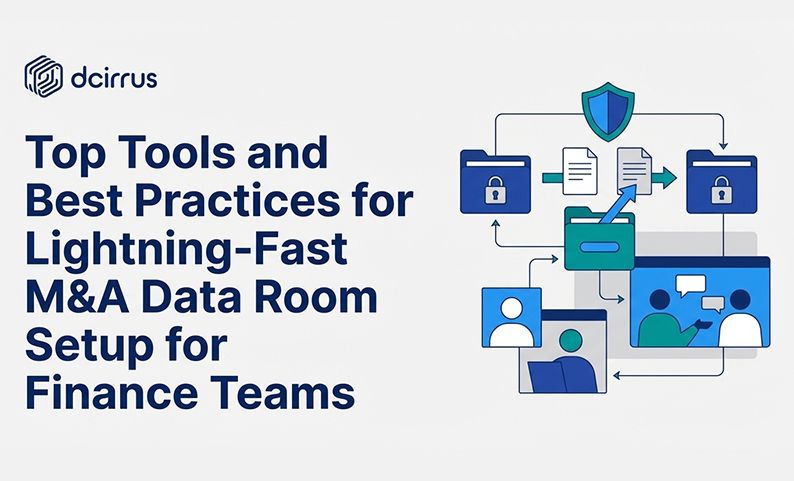
Top Tools and Best Practices for Lightning-Fast M&A Data Room Setup for Finance Teams
Understanding the Critical Role of M&A Data Rooms in Finance-Led Transactions
In any acquisition (friendly, hostile, asset purchase, or stock purchase), finance teams become the operational hub for due diligence. You’re expected to produce accurate financials, respond to buyer questions, protect sensitive documents, and keep timelines moving. All while managing regulatory hurdles and stakeholder expectations.
A purpose-built virtual data room acts as your secure data repository for high-stakes transactions. It helps you centralize confidential deal documents, enforce access control without slowing reviewers down, support multi-stakeholder workflows, and create an auditable record for compliance.
The most common failure mode? Not missing documents. It’s slow setup, messy organization, unclear permissions, and fragmented communication. Fix those and you reduce friction while lowering the risk of deal delays.
Essential Tools for Lightning-Fast M&A Data Room Setup
Speed comes from selecting tools that reduce manual effort while increasing consistency and control. A finance-ready stack typically includes a VDR platform plus capabilities for document intelligence, identity security, and collaboration.
What VDR platforms support rapid deployment?
A VDR purpose-built for transactions is the core tool for fast setup. Compared to generic file sharing, M&A-focused platforms are designed for structured indexing, permissioning, watermarking, audit trails, and high-volume document review.
When evaluating VDR platforms for rapid deployment, prioritize:
- Standardized folder structures for common due diligence categories
- Bulk upload with metadata support
- Fast permission assignment at folder and file levels
- Strong search and filtering across large document sets
- Admin tools that streamline multi-stakeholder onboarding
DCirrus Virtual Data Room is a secure, cloud-based VDR built for M&A, IPOs, due diligence, and fundraising. It includes enterprise-grade security and real-time collaboration features designed to keep transactions moving.
How AI-powered document intelligence speeds up prep
AI-powered document intelligence targets the biggest time sink: manual prep. Instead of relying on humans to label and sort everything, AI analysis features can help you move faster through smart indexing, automated data classification, metadata search that accelerates retrieval during Q&A cycles, and AI-assisted redaction to remove sensitive data when needed.
The goal? Reducing the back-and-forth that happens when reviewers can’t find what they need. Or when sensitive information requires repeated edits before sharing.
Secure access and identity management tools
Fast setup fails if security becomes an afterthought. Finance teams need access controls that are strong but not cumbersome (especially when onboarding multiple buyer-side users, advisors, and internal reviewers on tight timelines).
Look for tools and configurations that support:
- Multi-factor authentication options that fit different user environments
- Device-level approval to prevent access from unknown endpoints
- IP address restrictions for higher-risk user groups
- Role-based permissions to control who sees what and when
- Administrative visibility into user activity via audit trails
DCirrus includes two-factor authentication via SMS, email, and Microsoft Authenticator. Plus device-level approval using unique device ID mapping, IP restrictions, and granular permissioning at folder and file levels.
Real-time collaboration features that keep deals moving
One of the fastest ways to slow a deal down is letting diligence communication happen across email threads and spreadsheets with no single system of record.
Modern VDR collaboration features support real-time work by keeping questions, answers, and document context inside the secure environment. Built-in Q&A discussion forums to manage buyer questions in one place. Secure messaging for clarifications that shouldn’t live in email. Commenting and annotations for document-specific context. Automated email notifications for uploads and changes. Version control to prevent “wrong file” confusion.
DCirrus includes integrated Q&A forums, secure messaging, document commenting, notifications, and version control to help finance, legal counsel, and deal teams stay aligned.
Best Practices for Finance Teams to Accelerate M&A Data Room Setup
Tools matter, but the biggest speed gains usually come from process. Below is a finance-first, step-by-step approach you can repeat across deals.
Step 1: Preparing and organizing financial documents efficiently
Start by designing for how buyers review information (not how your internal folders look). A fast data room is predictable, searchable, and clearly indexed.
Best practices that help you move quickly:
- Standardize a folder structure that matches typical diligence flows: financials, tax, debt, revenue, HR, legal, compliance, operations
- Use consistent naming conventions from day one with dates, entity, document type, version
- Maintain a simple index that mirrors the folder structure
- Decide upfront which documents require redaction or restricted access
- Separate source files from share-ready files when working papers need cleanup
If your VDR supports AI-powered document intelligence, use it to reduce manual labeling and improve searchability during busy review periods. Worth implementing this early.
Step 2: Setting granular access controls and permissions
Permissions are where speed and risk meet. Get access control wrong and you either expose sensitive data or spend the entire deal reacting to urgent permission changes.
Set permissions with a role-based model that’s easy to administer:
- Define user groups aligned to deal roles (internal finance, internal legal, buyer team, external advisors, auditors)
- Apply default permissions at the folder level to avoid file-by-file admin work
- Use file-level overrides only for exceptions like customer contracts or sensitive projections
- Time-box access for parties that should only see documents during specific windows
- Keep a process for rapid permission updates without breaking your control framework
Granular access controls are also a trust signal. When stakeholders see that the data room is well-governed it reduces friction and supports faster decision-making.
Step 3: Implementing security protocols without compromising setup speed
Security doesn’t need to slow you down if you configure it in parallel with onboarding and document ingestion. Define a baseline “secure by default” configuration and only tighten controls where necessary.
Practical security protocols finance teams can implement quickly:
- Enable encryption for data at rest and in transit as a baseline requirement
- Use digital rights management controls to limit printing, copying, and unauthorized sharing
- Apply dynamic watermarking to discourage leaks and increase accountability
- Set clear rules for downloads vs. view-only access depending on document sensitivity
- Use MFA and device approvals for external parties where data sensitivity is high
Modern data rooms can support customizable DRM, device-level approval, and dynamic watermarking to protect confidential M&A documents without turning access into a bottleneck.
Step 4: Enabling seamless multi-stakeholder collaboration
Fast due diligence is mostly about reducing waiting. You want the buyer to get answers quickly, with clear references to source documents. Without finance becoming the “help desk” for repeated questions.
Ways to set up collaboration for speed:
- Centralize questions in a VDR Q&A module rather than email
- Assign internal owners to question categories (finance, tax, legal, HR) to reduce rerouting
- Use document-level annotations to explain context directly where reviewers look
- Turn on notifications so new uploads and responses are seen immediately
- Treat Q&A and document updates as one workflow, not separate activities
This structure reduces version confusion, speeds clarification cycles, and leaves a clean record of who asked what and when. That’s the theory. In practice it also cuts the back-and-forth that drags deals out by weeks.
Key Security Features Finance Teams Must Prioritize for M&A Data Rooms
Finance teams often share documents that can move markets, change valuations, or affect negotiation leverage. Security features should protect confidentiality while still enabling rapid review.
Digital Rights Management (DRM) and watermark customization
DRM is about controlling what users can do with documents after they have access. In M&A that matters because information can be misused even when access is technically “authorized.”
Prioritize DRM controls that allow you to prohibit printing, copying, and re-sharing where needed. Set expiry dates on downloaded files. Control download permissions by user group or document type.
Watermarking complements DRM by discouraging leaks. Dynamic watermarking typically includes identifiers like the user’s login, timestamp, and IP address on viewed or exported documents. This helps enforce accountability without slowing down legitimate reviewers.
DCirrus supports document-level DRM controls and customizable watermarking that can include user login information, IP addresses, and timestamps.
Multi-factor authentication and device-level approval
MFA reduces the risk of compromised credentials, but finance teams also need to keep onboarding smooth for external stakeholders reviewing under time pressure.
A practical approach:
- Use multi-factor authentication options that fit the user base (SMS, email, authenticator apps)
- Require device-level approval for higher-risk roles or external parties
- Apply IP restrictions when access should only happen from approved locations
DCirrus supports multi-factor authentication via SMS, email, and Microsoft Authenticator. Plus device-level approval using unique device ID mapping.
Automated audit trails and compliance monitoring
Audit trails are not just for “after the fact.” They help you manage diligence in real time by showing what’s being reviewed, what’s being ignored, and where stakeholders may be stuck.
Automated audit trails should capture logins, document views, downloads, and prints. Permission changes and administrative actions. Version history and document updates. Q&A history tied to the transaction record.
This supports compliance monitoring and helps finance teams demonstrate governance (especially useful when dealing with regulatory scrutiny or internal control requirements).
Cloud Deployment and Compliance Considerations Impacting Setup Speed and Security
Deployment choices directly affect how quickly you can launch a data room and how confidently you can invite external stakeholders, especially across borders.
Multi-region deployment options for global finance teams
For global deals, latency and data residency can become hidden blockers. Multi-region deployment options help by keeping performance acceptable for all parties and aligning storage with jurisdictional requirements.
When evaluating multi-region hosting, consider where your buyer, advisors, and internal teams are located. Whether the deal involves regulated data that must stay in-region. Whether multi-region availability can reduce access friction during peak diligence. (It usually can.)
DCirrus is powered by AWS and Azure cloud infrastructure with multi-region data center availability and supports data localization so clients can choose server locations to meet regional requirements.
Ensuring compliance with GDPR, CCPA, and other financial data regulations
Compliance isn’t just legal language. It can change how you configure access, retention, and storage. If you wait until late-stage diligence to address compliance protocols you risk rework and delays.
Practical compliance considerations that impact setup:
- Data localization requirements that determine where documents can be hosted
- Access governance policies for who can view sensitive personal or financial data
- Retention and deletion expectations for transaction records
- Security certification expectations from institutional stakeholders
DCirrus supports compliance with GDPR and other regional data protection regulations, and utilizes ISO 27001 certified data centers with SOC 1, 2, and 3 reports. Align your VDR configuration to compliance needs early so you don’t have to restructure mid-deal.
Common mistakes that delay M&A data room readiness
Most delays come from preventable operational issues. Addressing these early keeps your transaction momentum intact.
Overly manual document organization and version control issues
Manual organization creates inconsistent naming, duplicate uploads, and missing context. Version control issues create a bigger risk: reviewers may rely on outdated financials.
Avoid these pitfalls by enforcing naming and version standards from the first upload. Using a single system for “current version” rather than emailing attachments. Leveraging VDR version control so history is preserved without confusion.
Improper permission settings leading to security gaps
Speed sometimes tempts teams to “open everything” and fix permissions later. That approach increases exposure risk and can damage trust during diligence.
Common permission mistakes to avoid:
- Granting broad access to external parties by default
- Forgetting to remove access when an advisor rotates off the deal
- Allowing downloads of highly sensitive documents without DRM and watermarking
A tighter permission model can actually be faster because it reduces emergency corrections and escalations.
Email dependence undermining collaboration efficiency
Email creates fragmented Q&A, no consistent record, and repeated questions because stakeholders can’t see what’s already been answered.
Replace email dependency by using an in-platform Q&A forum for official diligence questions. Linking answers to the exact supporting document location. Keeping updates and notifications tied to the VDR workflow.
The result? Less rework, fewer misunderstandings, and faster stakeholder alignment.
Summary Checklist: Lightning-Fast M&A Data Room Setup for Finance Teams
Use this checklist as a repeatable playbook for your next deal:
- Select a purpose-built virtual data room rather than generic file sharing
- Use standardized folder structures and consistent naming conventions
- Enable AI-powered document intelligence where available for smart indexing and automated classification
- Configure role-based access control with minimal file-level exceptions
- Turn on DRM controls and dynamic watermarking for sensitive documents
- Require MFA and use device-level approval for external stakeholders when appropriate
- Centralize diligence communication with built-in Q&A, comments, and notifications
- Ensure audit trails are enabled and reviewable for compliance monitoring
- Plan cloud hosting and data localization early to avoid compliance-driven rework
- Track KPIs like time to launch, Q&A cycle time, and security exception counts
Ready to secure your transactions?
Book a free demo of DCirrus Virtual Data Room today and experience enterprise-grade data protection with encryption, access controls, and compliance-ready localization.
Latest Posts
Buyer Engagement Analytics in a VDR: What Deal Teams Can Track
August 17, 2026
12 VDR Features Required for IPO Preparation in India
August 13, 2026
What Bankers and Auditors Need From an IPO VDR in India
August 12, 2026